The Last Judgment - Michelangelo’s Vision of Eternity in the Sistine Chapel
Explore Michelangelo’s The Last Judgment — a monumental fresco on the Sistine Chapel’s altar wall depicting humanity’s final reckoning with divine power.
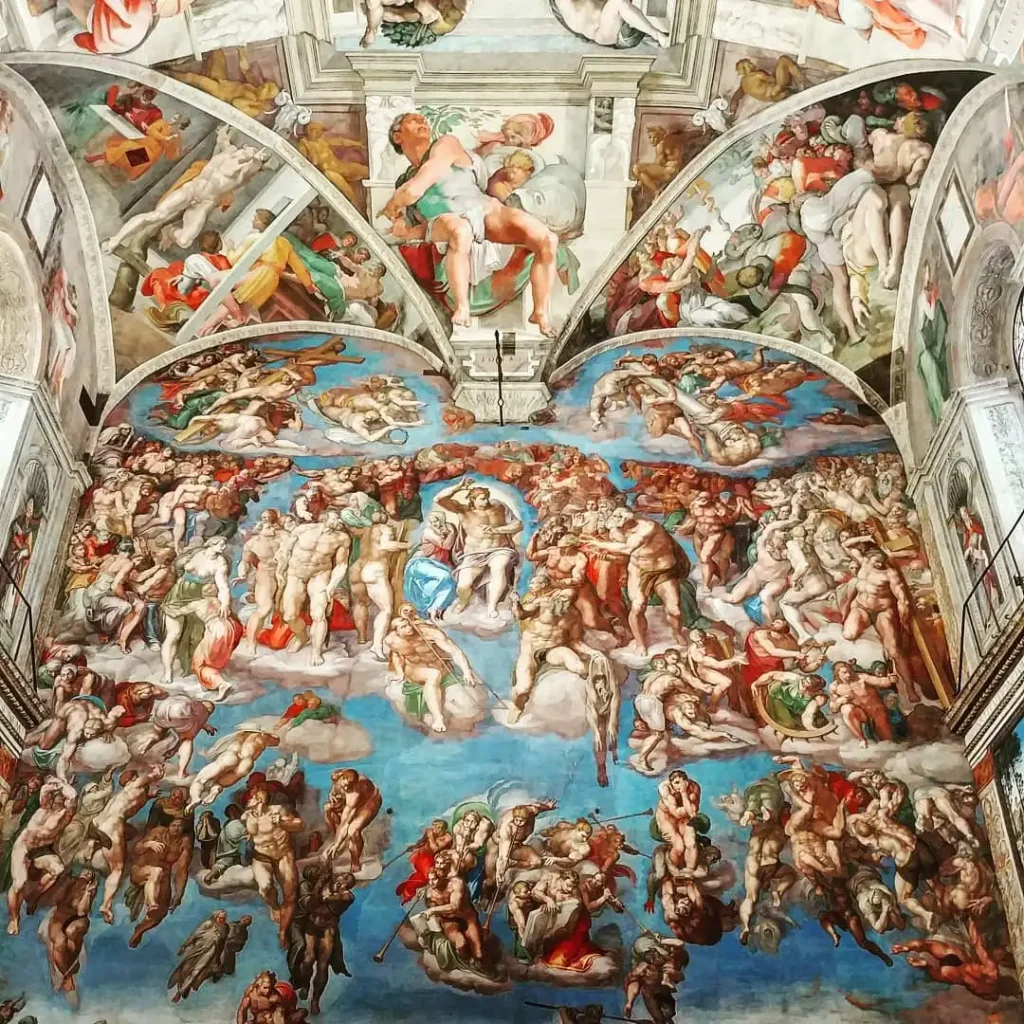
When Michelangelo returned to the Sistine Chapel in 1536, he was no longer the idealistic young sculptor of the ceiling.
Rome had fallen. The Reformation had divided Christendom. The artist, now in his sixties, turned inward — and painted apocalypse.
🔥 The Drama of Salvation
Completed in 1541, The Last Judgment spans the entire altar wall, towering 13 meters high. It depicts the Second Coming of Christ and the final reckoning of souls.
At its core stands Christ the Judge, a figure of muscular divinity — neither wrathful nor merciful, but inevitable. His raised arm divides light from darkness once more, echoing the first act of Genesis.
Around Him swirl a cosmic vortex of saints, martyrs, and angels, each in dynamic motion.
⚰️ The Human Condition
Below, resurrection and damnation unfold:
- The saved ascend in spirals toward divine light.
- The damned are dragged down by demons into infernal chaos.
- Charon’s boat and Minos’ serpent tail — borrowed from Dante’s Inferno — connect Christian and classical visions of judgment.
“The living, the dead, and those yet unborn — all judged in one eternal moment.”
Saint Bartholomew’s flayed skin bears Michelangelo’s own face — a haunting confession of humility and fear.
👁️ Scandal and Reform
The fresco’s nude bodies scandalized the Vatican. Critics called it indecent; the Church, amid Counter-Reformation pressures, demanded it be “corrected.”
Painter Daniele da Volterra was tasked with adding draperies — earning the nickname “Il Braghettone” (“the breeches-maker”).
Yet even censored, the work radiated spiritual intensity unmatched in Western art.
✨ The Vision of Eternity
The Last Judgment is not merely about death — it is about the moral anatomy of mankind. Every body becomes conscience made visible: twisted, striving, trembling between grace and terror.
It is Michelangelo’s final sermon, painted not for glory, but for truth.
“I saw the angel in the marble and carved until I set him free.”
著者について

Art Historian
文化愛好家として、また旅行者として、このサイトを作り、訪問者がシスティーナ礼拝堂の芸術を楽しめるようサポートします。
Tags
Comments (0)
Loading comments...